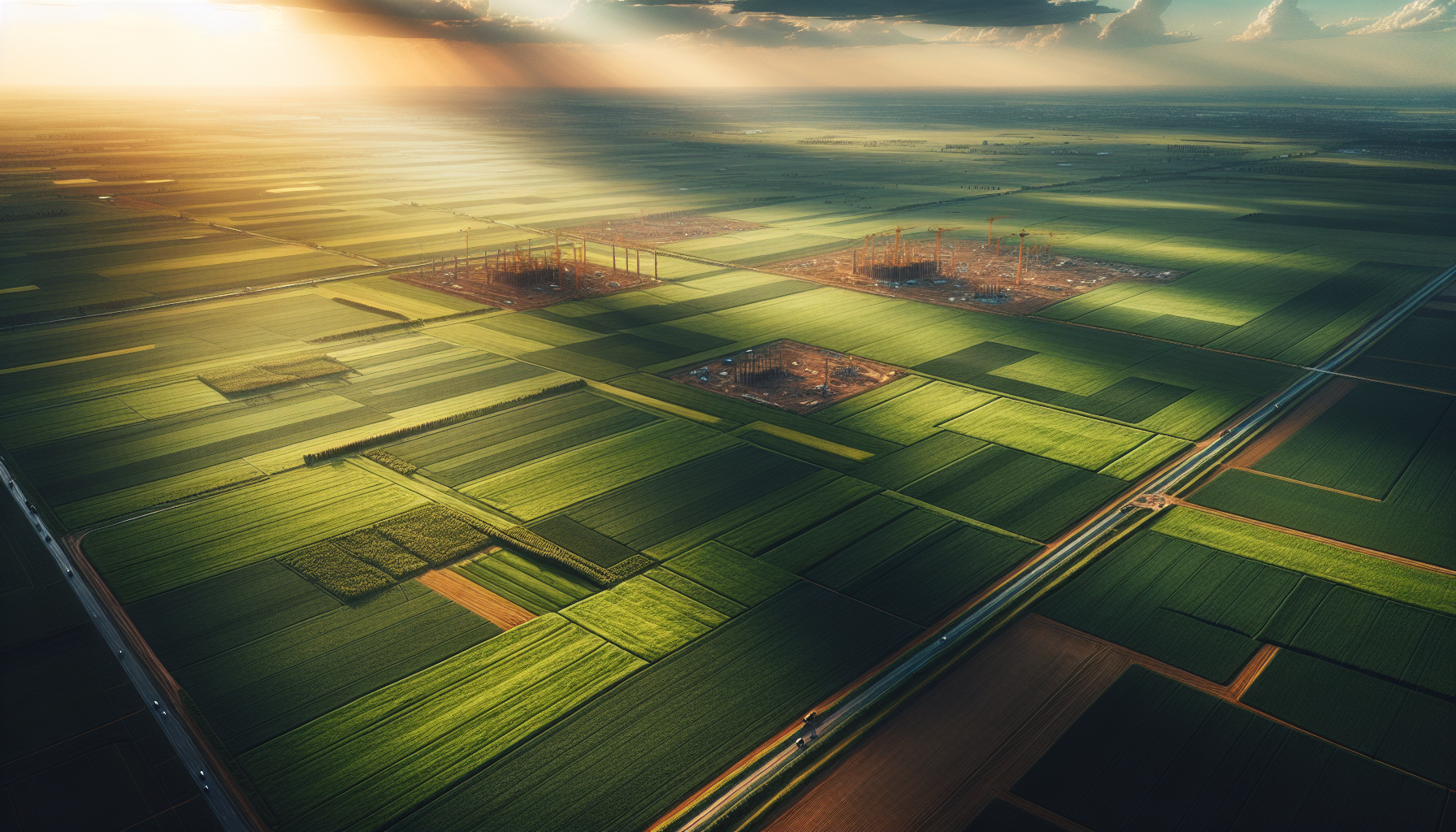
Michigan Town Rejects OpenAI-Oracle Data Center, Construction Starts Anyway
MICHIGAN — A rural Michigan farming community voted to reject plans for a data center backed by OpenAI and Oracle, but construction on the facility began weeks later, Yahoo Finance reported.
The case highlights tensions between local governance and technology companies’ efforts to secure computing capacity for artificial intelligence, as major AI companies build out physical infrastructure to train and run large-scale models.
Residents of the agricultural community opposed the project, which would have brought a large-scale data center to their town, Yahoo Finance reported. Despite the local vote against the development, construction activity moved forward shortly afterward, raising questions about the limits of local authority when state-level permitting decisions override municipal votes.
The project is part of the broader OpenAI-Oracle partnership to expand AI computing infrastructure across the United States. Oracle has been a key partner in OpenAI’s infrastructure strategy, and the two companies have pursued rapid data center expansion as demand for AI compute has surged.
A Pattern Across Rural America
The Michigan dispute is not an isolated case. Across the country, rural communities have increasingly found themselves at the center of the AI infrastructure boom, as tech companies seek out locations with affordable land, available power capacity and favorable tax conditions for energy-intensive data center operations.
Data centers require enormous amounts of electricity and water for cooling, and their construction can transform the character of agricultural and residential areas. Residents in multiple states have raised concerns about noise, water usage, strain on local power grids and the environmental impact of large-scale computing facilities.
Federal Tailwinds, Local Headwinds
The tension between local opposition and continued construction reflects a broader dynamic in U.S. AI policy. The federal government has signaled support for domestic AI infrastructure development, with the Trump administration backing data center construction as part of its economic and national security agenda.
That federal support has at times conflicted with the preferences of local communities that bear the direct impact of construction and ongoing operations. The Michigan case illustrates the legal and political questions that can arise when municipal votes conflict with state-level permitting authority or pre-existing land-use agreements.
Stakes for the AI Industry
Access to sufficient computing power is widely considered a primary bottleneck for AI development, and companies that fail to secure data center capacity risk falling behind competitors. The OpenAI-Oracle partnership is part of a multibillion-dollar investment in AI infrastructure that also includes commitments from Microsoft, Google and Amazon.
The outcome in Michigan could offer a template for how similar disputes play out in communities across the country as the AI infrastructure buildout accelerates through 2026 and beyond.